Cima Stays with Her Mother, Missing Tomas's Final Hours
The Dog StarsCima Stays with Her Mother, Missing Tomas's Final Hours describes a loss shaped by uncertainty: as her mother was dying and a new disease was only beginning to be understood, Cima stayed with her parents while Tomas became ill and died far away. Tomas called for her in his final hours. Her later account holds together the decision she made with what she learned afterward, the tenderness of their shared life, and a regret that no explanation can undo.
The Decision Amid Uncertainty
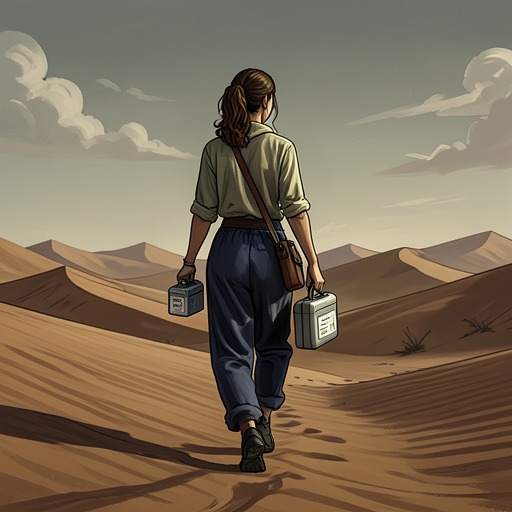
Before the networks went down, Cima's friend Joel, a doctor who ran the hospital wing, called her. Her mother was dying, and Cima could not fly back to New York City in time; she chose to stay with her mother and father. At that point Tomas was coughing, but he had no fever, and only a few cases of the emerging illness had been confirmed. Many people were coughing. Cima did not yet know that Tomas would contract the disease, or that this would be the last time she could have chosen to be with him.
The decision was made in a crisis with incomplete information, not with knowledge of Tomas's fate. In retrospect, Cima wonders whether her position in city public health, with the first reports arriving, should have told her more. She also asks why she stayed with her mother: her mother had her husband beside her, Cima reflects, while Tomas did not have her. The hindsight does not make the original uncertainty disappear; it gives her a sharper measure of what she wishes she could have done.
Tomas's Death and the Unfinished Farewell
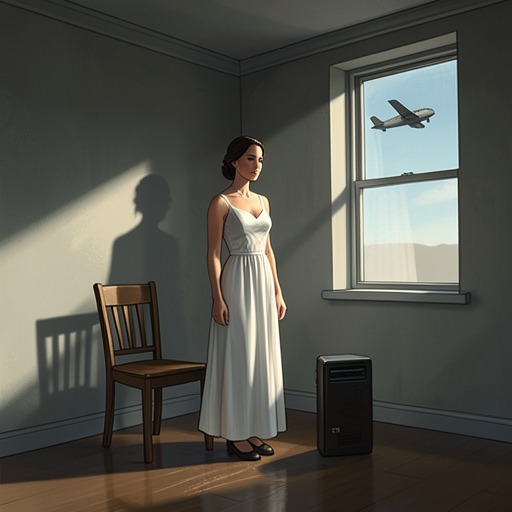
Tomas died in the hospital calling Cima's name and looking around the ward for her, confused and desperate. Cima was not there to witness his final hours. Joel offered to cremate Tomas and keep his ashes, a kindness she remembers with deep gratitude. She planned to fly home in a week or two, drive upstate, and scatter the ashes in John's Brook, in the mountains near Keene Valley, where the couple had spent weekends together. The planned return offered a way to honor Tomas, but it could not give her back the chance to accompany him as he died.
The account later surfaces in a garden, after Hig has told Cima that he ended Melissa's life at her request. Cima responds that she wishes she could have been there to do the same for Tomas. She cries silently, holding chard, while Hig puts his vegetables in a basket and returns to weeding, shaking soil from roots and putting worms back in the ground. The small actions do not resolve what she has said; they leave her grief present between them, without turning it into an argument or a lesson.
The Life They Were Waiting For
Cima remembers the years before the pandemic through recurring weekends in the Adirondacks. She and Tomas stayed in a white clapboard cottage in the village, with a view of Noonmark from the sleeping porch. On Saturdays they climbed the small, sharply peaked mountain after sleeping in, following its ledgy trail to a rocky summit just above the stunted firs. On long evenings they rode single-gear bicycles up the paved road, then walked barefoot through maples to a swimming hole fed by a cold waterfall. Even a bout of poison ivy that kept Cima from work for two days belongs to the recollection of that shared time.
These were rituals made within a period of waiting. Tomas was finishing his degree; Cima hoped to have a child; both imagined that the consequential work of living lay ahead. Looking back, she sees the interval not as a prelude that failed to become life, but as a life with its own particular sweetness. Its uncertainty and transience, once felt as a temporary condition, become part of what she mourns: the ordinary weekends were not outside their life together but among its most precious parts.
Regret, Memory, and Loss
Cima's story is shaped by the delay between what she knew then and what she knows now. Tomas's cough did not yet establish what was happening, and her mother's decline demanded her presence; only afterward could the early reports and his last hours acquire their full meaning. Her regret is therefore not simply a judgment of her past self. It is the painful knowledge that the moment of choice came before the outcome was clear, while the certainty that follows cannot change it.
The wider narrative sets this human bereavement within a world of accumulating losses. Hig remembers the disappearance of trout and other species, continues to fish streams made warmer by changing conditions, and fears the loss of creeks as snowpack and rain diminish. Those ecological griefs are distinct from Cima's grief for Tomas, but both make loss concrete through remembered places and lives that can no longer be restored. Her planned return to John's Brook is an act of remembrance; the stream and the shared weekends give that remembrance a location, even as the absence she carries remains unresolved.